Lifting the veil: electronifying opaque markets
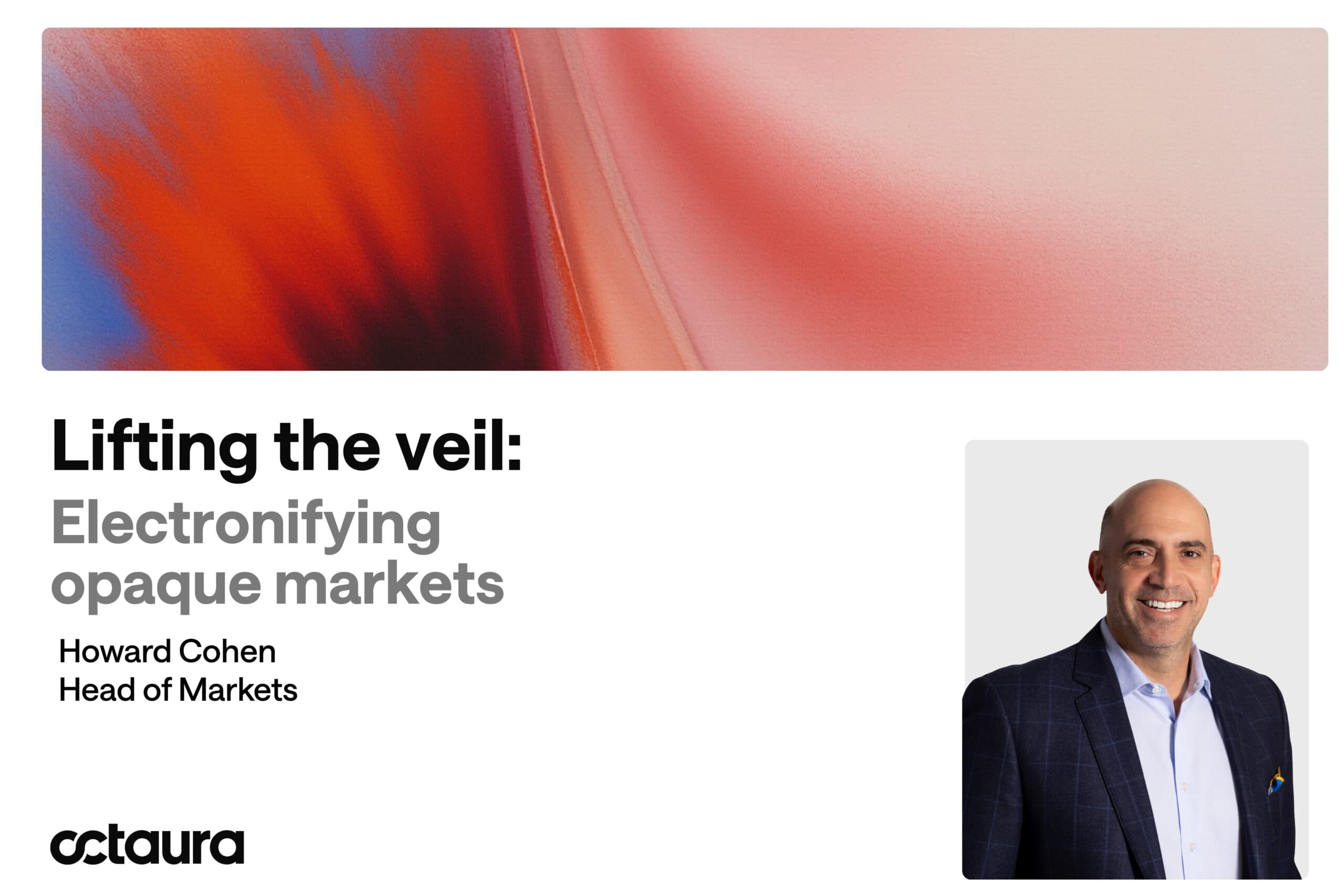
Howard Cohen, Head of Markets, Octaura
Over the past two decades the corporate credit market has embraced electronification at an ever-accelerating pace. In the early 2000s, corporate credit trading remained phone-based because of illiquidity, balance sheet intensiveness and asymmetric information. As late as 2013, only 8% of investment grade and 2% of high yield traded electronically1, at a time when rates, FX, and equities had already been electronic for decades, making corporate credit the last frontier. It would take another decade, as well as two exogenous influences for the levered loan and structured credit to benefit from electronification.
TRACE, introduced in 2002, fundamentally altered corporate credit markets by making post‑trade pricing public for the first time, changing price discovery and dealer behavior. Electronification in credit did not just begin with execution, it was accelerated by data, and TRACE helped lay the foundation for electronic workflows to begin taking hold.
Secondly, apart from market infrastructure, corporate credit trading was impacted by COVID 19. The pandemic forced trading desks to operate remotely, and electronic adoption compressed into 3 years what may have taken another decade. By the end of the pandemic, e-trading in IG bonds had jumped to just under 50% market share.2
By 2024, electronification had effectively shown market participants the power of streamlined workflows and data insights with less breaks. By mid- 2024:
- ~30% of U.S. corporate bond dealer volume executed without human intervention.3
- Top tier dealers automated ~57% of trading; non-bank liquidity providers ~70%.3
- Dealers reported handling ~30,000 RFQs/day, far beyond human capacity.3
As certain corners of the credit market (IG & HY bonds) embraced the efficiency and data gains from electronic trading, it set the stage for further shifts in market trends. Electronic trading has lowered many barriers to entry with reduced costs to trade and better access to liquidity, facilitating the introduction of new protocols like Portfolio Trading, and allowing new entrants into the market.
Loan’s rapid electronification
Although syndicated loans and CLOs are integral parts of leveraged credit, they have been the last to electronify – historically relying on phone calls, spreadsheets, and fragmented bilateral negotiations. The longstanding relationship bond (see what I did there) between the borrower and lender, coupled with relationships between banks largely kept the BSL market on a bilateral basis.
The relationship piece, plus the fact that loans themselves are complex instruments, trading infrequently and with thousands of unique contracts and varying terms, makes standardization for trading difficult.
Octaura has remained focused on bringing efficiencies as well as automating legacy manual workflows to optimize protocols traders have relied on for years. These include Bilateral, Request for Quote (RFQ), and Lists, as well as the labor-intensive BWIC auction process for CLOs. We have also invested in OMS connectivity, which is proven to materially reduce friction around execution, breaks, and post‑trade inconsistencies — another prerequisite for real scale.
Bringing Straight Through Processing (STP) to the loan and CLO market have proven critical to breaking the post trade issues that have unfortunately been a longstanding hallmark of the loan market.
At the same time, loans began to hit key points of inflection:
- Electronic loan trading rose from~1% in early 2024 to ~6% by late 2025. 4
- Platforms like Octaura facilitated ~1% of total loan trading in their first year, a pace that took nearly a decade in high yield. 5
- Secondary loan trading hit$517B in H1 2025, up30% from H2 2024. 4
- By January 2026, Octaura reached 7.7% market share of secondary loan trading based on volumes reported by the LSTA.
- On Octaura, electronic loan trading volumes have increased more than 10× since early 2024.
Some might say loans compressed 20 years of credit market evolution into ~5 years. In short order, there has been a clear fundamental shift in the loan market in terms of electronification. Leveraged loan investors have grown to rely on electronic trading for improved liquidity, price transparency, and efficiency. Instead of calling every dealer to trade, they can send out a request-for-quote (RFQ) and almost instantaneously get back multiple levels. CLO liquidations, once a multi-day exercise riddled with email and spreadsheet pitfalls, can now be executed in minutes.
Octaura has held a unique position since inception, backed by the market’s leading dealers. We started with dealers because they are core to the loan market structure: the primary source of liquidity and price formation, and the intermediary on secondary trades. In our opinion, dealers that have embraced new technology gain share, reduced breaks, and align more closely with client workflows. With each new dealer onboarded, Octaura’s network effect strengthens. Dealers can also handle larger trade lists, capture more inbound flow, and reduce operational burden by managing inventory electronically.
Data as a competitive edge
While elecontrification has begun to transform these markets, truly lifting the veil on loan and CLO markets involves greater market transparency, which starts with better data. Although some worry that electronic trading limits human input, decision makers now have access to more information and can better plan both individual and portfolio trades.
Octaura’s unique view of the loan and CLO markets and access to proprietary historical and live transaction data allows us to feed a robust data pricing and liquidity engine, for a more accurate, full picture of the loan market. As observed with the COVID pandemic, we have seen the power of accurate data in recent periods of stress: liquidity scores diverge sharply, bid‑offer spreads widen unevenly, and execution quality becomes a differentiator. This theme was further demonstrated in the first few months of 2026 – spurred by tariff volatility, war threats, and AI pressure on the market writ large – by the end of Q1, Octaura saw volume growth that was +125% YOY. In this environment, the need for real-time data becomes more pervasive.
The future: markets in color
Lifting the veil means clients are no longer bidding in the dark, but they are powered by data and electronic protocols that allow them to see a fuller market picture. Today, electronification of the loan market is real and accelerating, but many parts of the systems are still structurally broken, with delayed data.
Looking ahead, the next chapter of innovation and electronification will likely be characterized by the convergence of workflows, where data is embedded in each trading decision – think, pricing and liquidity scores accessible through each step of your workflow on Octaura. This coupled with more real-time data, and protocols that stretch beyond traditional negotiations – think Portfolio Trading – will help us to further accelerate another decade worth of innovation in one-third of the time.
Sources:
- September Spotlight: Corporate Bond E-Trading on a Roll | Coalition Greenwich
- Electronic Credit Trading Approaching Inflection Point in IG
- Bond Dealers Increasingly Automate Trading | Coalition Greenwich
- Unlocking opportunity in the leveraged loan market
- Octaura Secures $46.5 Million to Accelerate Growth in the Evolving CLO & Leveraged Loan Markets